An AI picker's assistant. It scrapes five estate-sale sites near home, has Claude read every sale photo and catalog what's worth flipping, prices each item against comps, and grades it on profit-per-mile — so I know which Saturday drives are actually worth taking.
These are the actual items QUARRY pulled from live estate-sale listings, described by
Claude Vision, and priced against real eBay sold comps. The panel below runs a faithful port of
scorer/scoring.py — profit 60%, distance 25%, confidence 15% — against those real
values. Against the archived inputs it reproduces all 98 stored scores, grades and verdicts exactly.
The point of the tool is the question “is this worth the drive?”, so the interesting control is distance. Every item below came from a sale 245 miles away, which is why almost nothing qualifies. Pull that slider down and watch the board re-grade — distance is a quarter of the score, and the whole thesis is visible in one drag.
Snapshot of the archive. Prices are eBay sold comps recorded at scrape time, not live listings.
Every card below is real data from the March 2026 run — 47 sales, 98 catalogued items. Press play, or click any stage. Switch the item to watch the scoring gate approve one find and reject another for distance.
The honest detail that sells it: stages 1, 3, 4 and 5 are deterministic Python — the only AI is stage 2. And that vision stage runs two ways: a real Claude API path, and a manifest/import mode where Claude Code does the analysis in-session on a Max subscription instead of paying per API call. The whole app self-demos: python run_web.py against the committed database renders this exact feed with no API key.
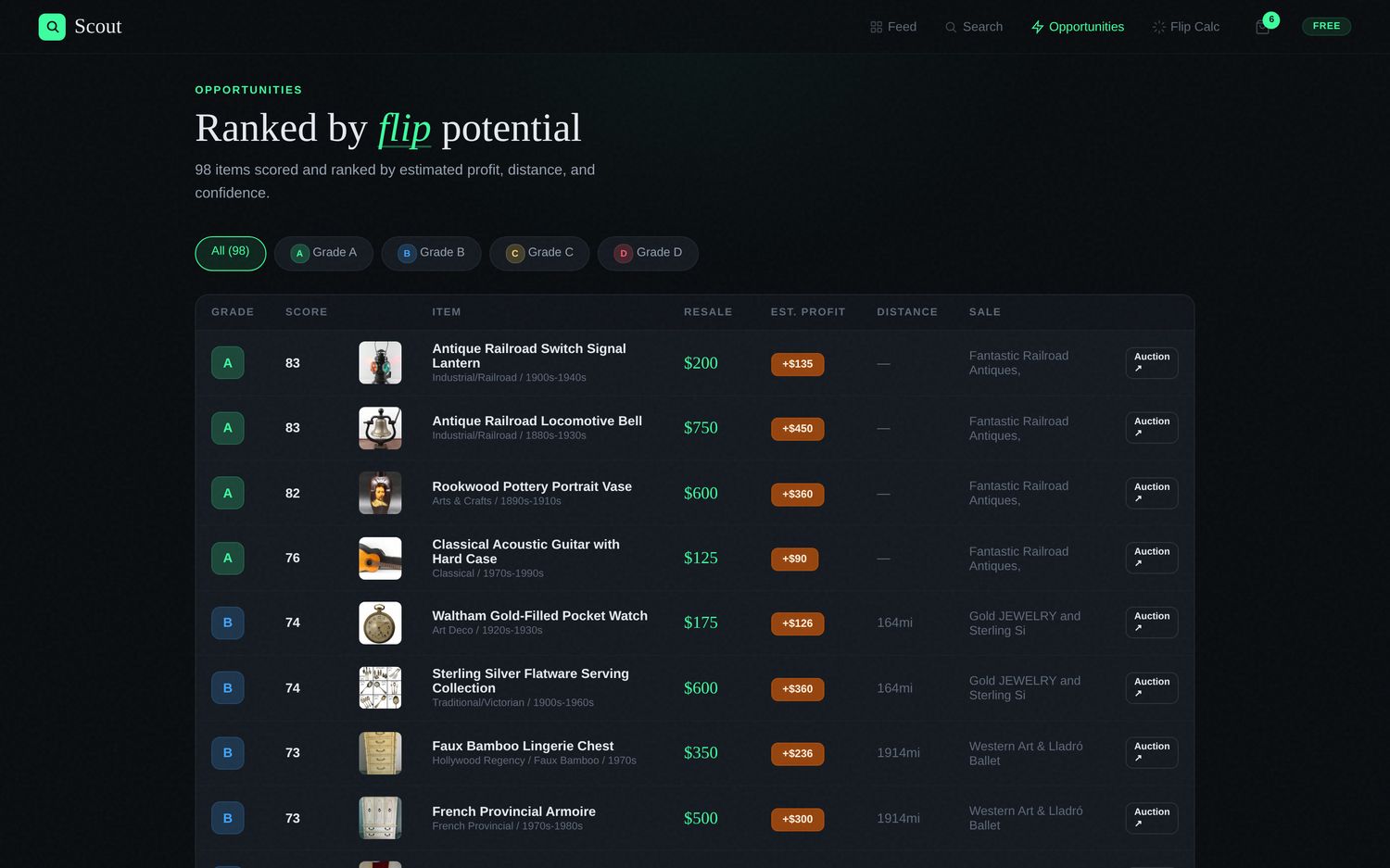
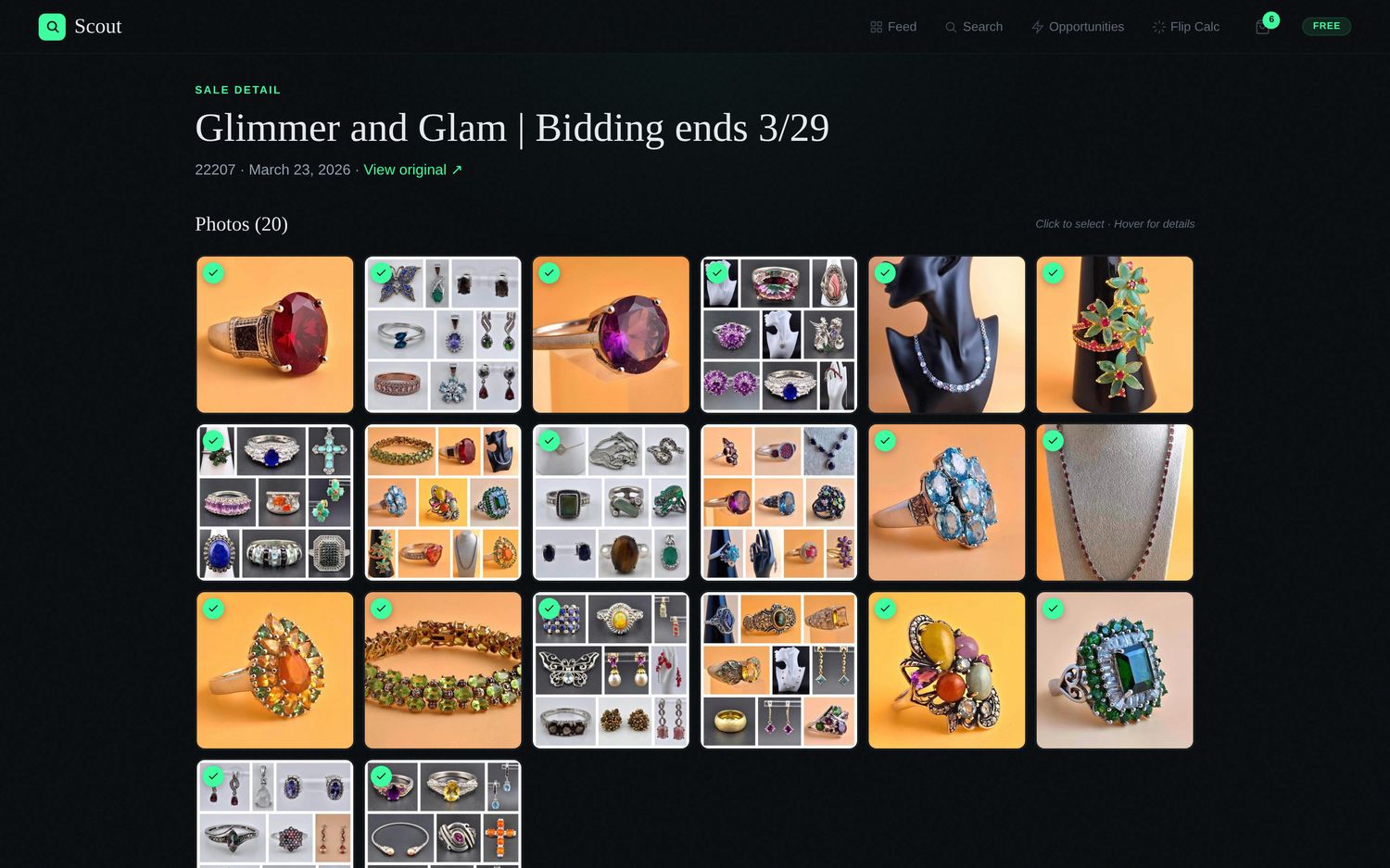
Live captures of QUARRY served from run_web.py against the committed March 2026 database — the same finds the walkthrough steps through. No API key, no staging.
Estate-sale photos are third-party listing images — fine for a portfolio demo; worth blurring or self-shooting if this goes fully public.
The good stuff is buried in blurry listing photos across a dozen sites, priced by people who don't know what they have — and the only way to find out if a sale is worth an hour's drive is to go. I wanted the triage done before I got in the car: what's here, what's it worth, and is the profit worth the miles.
The constraint I set myself: build the whole thing in a day, and never cross a platform's line. No scraping behind logins, robots.txt respected on every request, and no auto-posting anything anywhere. The interesting engineering is everything that falls out of those two rules.
estatesales.org, .net, .com, EBTH, AuctionNinja) all run through one robots-aware client — it caches each domain's robots.txt, hard-fails on disallow, honors crawl-delay, and adds jitter + backoff. No scraper is allowed a raw request. Results land in a 9-table SQLite store, idempotent on (source, sale_id).worth_the_drive only if it clears all three gates: score ≥ 55, under 60 miles, profit over $20. Survivors land in a dark Flask deal-feed with photo overlays, and checked sales export straight to a multi-stop Google Maps route.One end-to-end run on March 24–25, 2026 — and the database + photos are committed, so the feed still renders offline today.
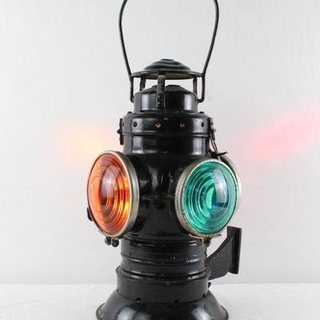
Top of the ranked feed from that run: an Antique Railroad Signal Lantern (grade A, 83.5 — comps $75/$200/$500, +$135 mid profit) and a Rookwood Portrait Vase (grade A, 82.8 — comps up to $2,000). Both cleared the gate. A Waltham gold-filled pocket watch scored a respectable B at 74.2 but got a red ✗ — a genuinely good item, 164 miles away. That rejection is the product working.
Two ideas here travel well beyond estate sales. The robots-aware polite client is a drop-in for any scraping project. And the dual-mode AI stage — same prompt served by the API or by an agent working an in-session manifest — is a real cost-avoidance pattern for anyone building on a subscription instead of metered API access.
I'm presenting this as a demonstrated capability, not a finished product — which is exactly what it is. The v2 blueprint (written months later) fixes the gaps above; this v1 proved the pipeline end to end in a single day.